Designing an AI-powered mental health and microbiome testing mobile app
-
The Project
Mobile App Case Study
-
My Role
Solo Product Designer
-
Timeline
6 Weeks
-
Status
MVP Prototype Live
A Gut Feeling
Bloom is an AI-driven app that helps users understand the connection between their microbiome, gut health and mental health. By combining stool sample data, food and mood tracking, and scientific insights, this app empowers people to take charge of their gut health and emotional well-being.
The Mind-Gut Axis
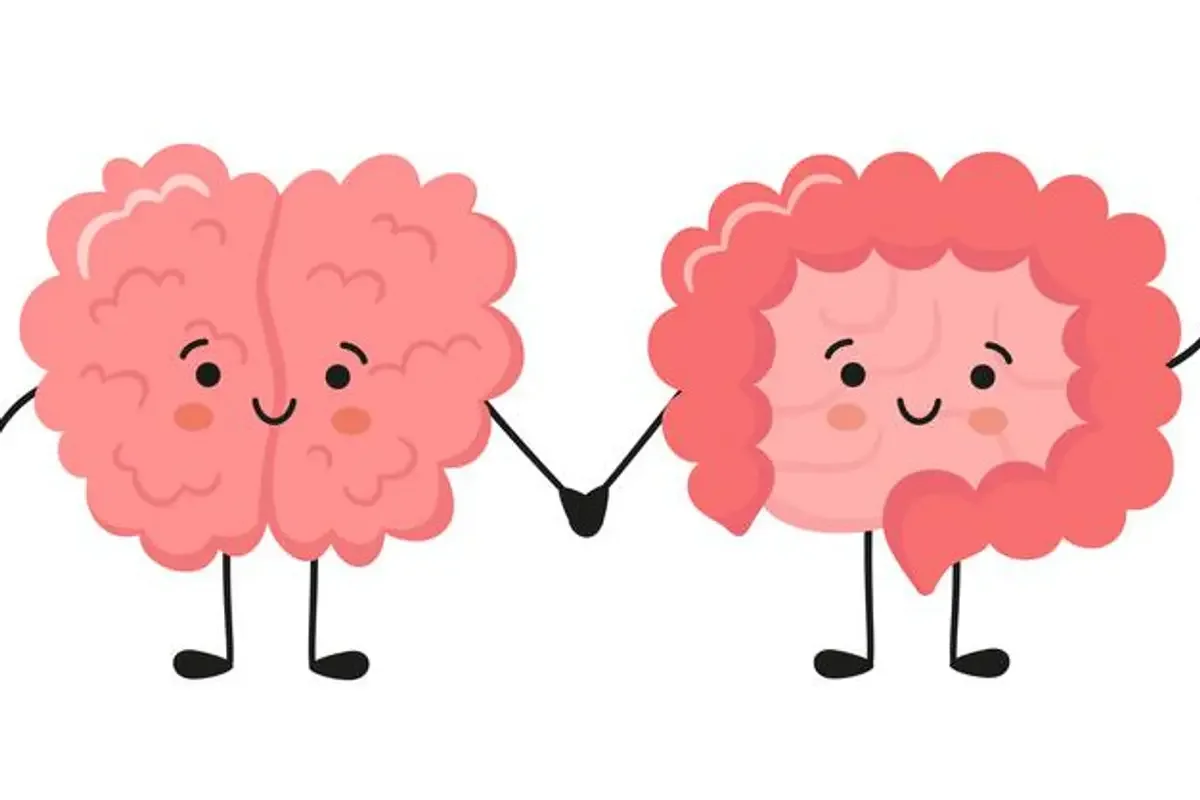
In my experience as a medical assistant in psychiatry, I noticed how patients often reported food intake symptoms alongside their mental health symptoms. The doctor I worked with often made dietary recommendations, revealing the true holistic nature of mental and physical health. This inspired me to learn more about the Mind-Gut axis and think of ways a product could highlight this.
Most people are not aware of the connection between their gut symptoms and emotional well-being. Meanwhile, microbiome testing feels complicated, expensive, or irrelevant, and once results are obtained, they’re often confusing and underutilized.
The Problem
Bloom App
Track correlations to create personalized insights
My mission is to demystify gut testing, simplify gut health, and turn scientific insight into actionable and personalized mental and physical health solutions.
Translate microbiome data
and results into intuitive
visual feedback
Build sustained motivation through
actionable recommendations
Define and Research
To ensure the app is built on sound research and avoids scientific errors,
I conducted some background research with the help of Claude, then translated the findings into scientifically sound UX ideas.
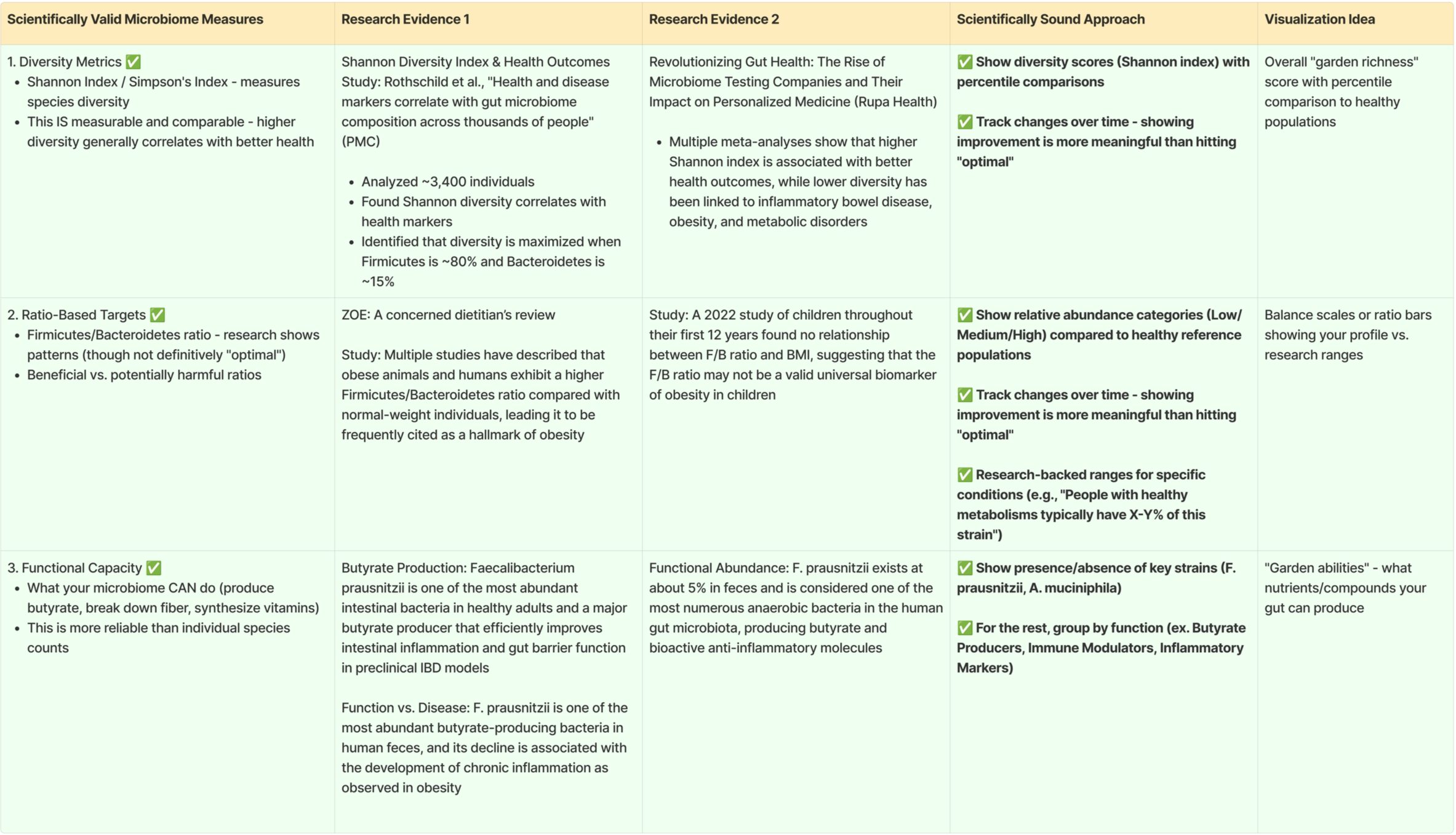
Diet and probiotics do alter the microbiome in response to treatment
for gut symptoms
Evidence-based
recommendations are
supported. Clinical diagnoses
or guarantees are not
Show presence or absence of strains, percentiles or ratios only.
No amounts or levels.
Represent by function,
not species
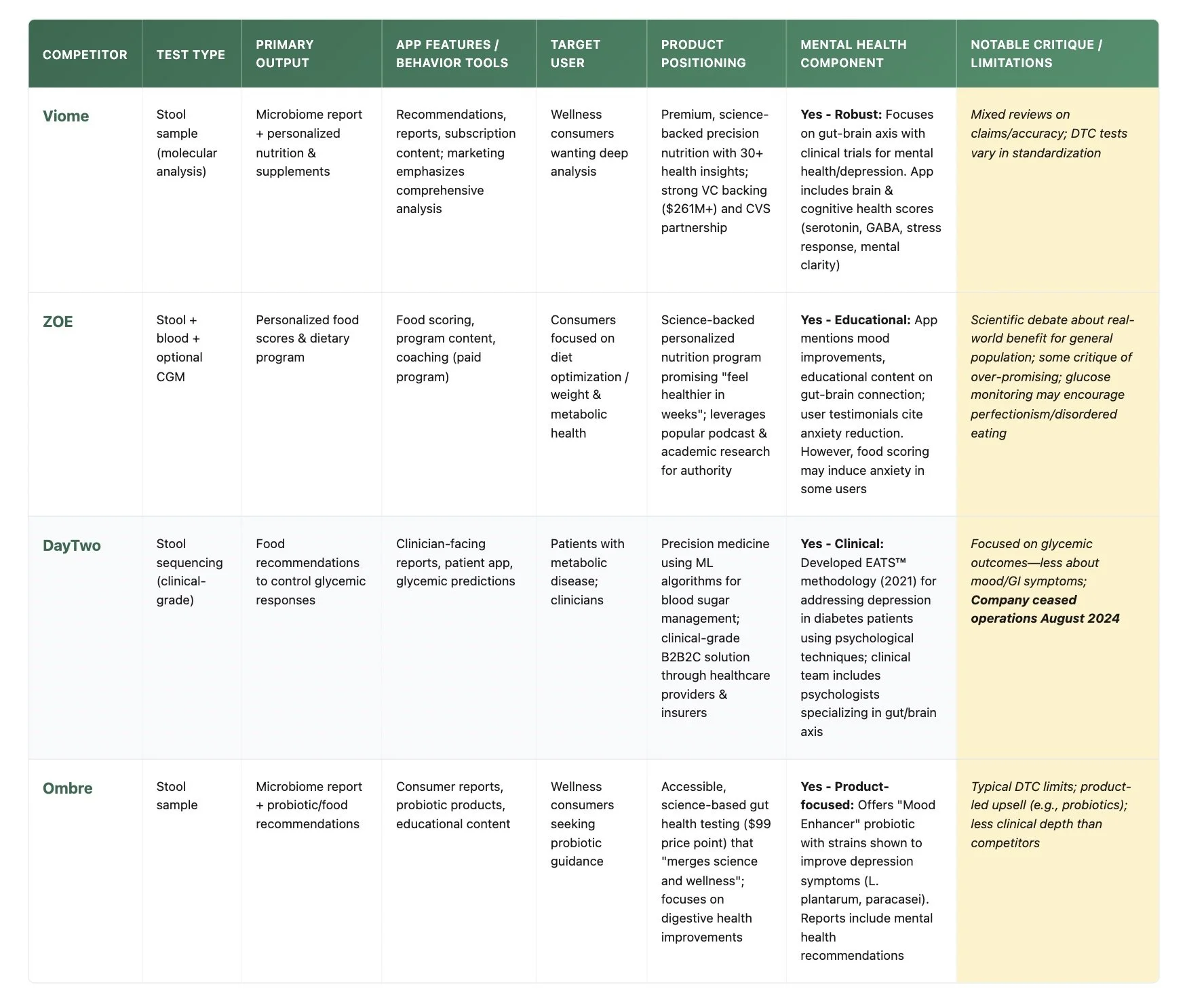
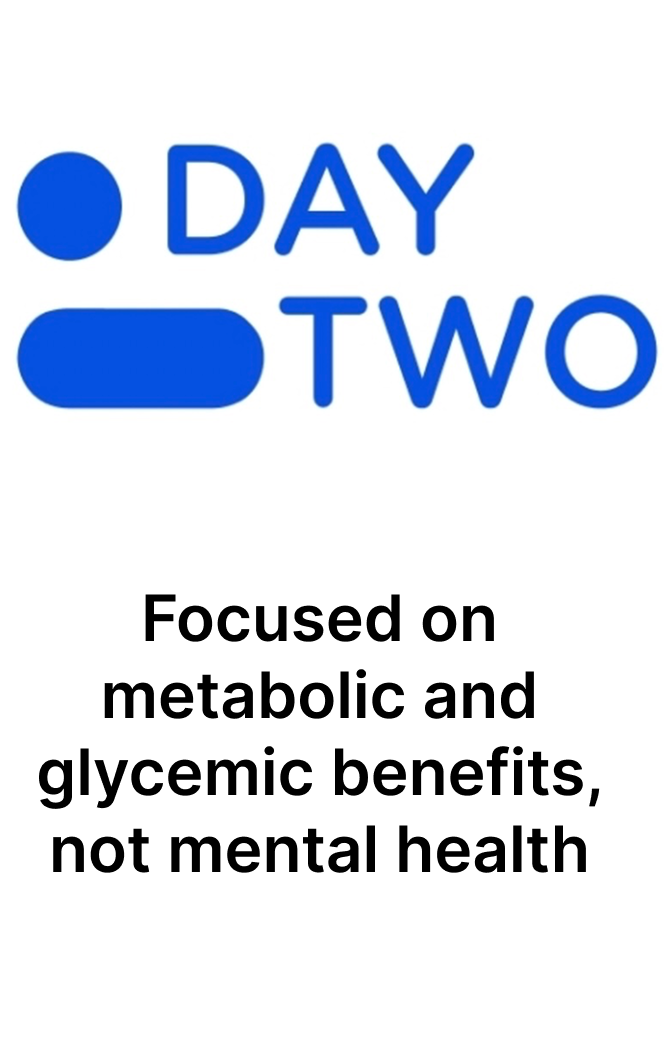
Competitive Analysis



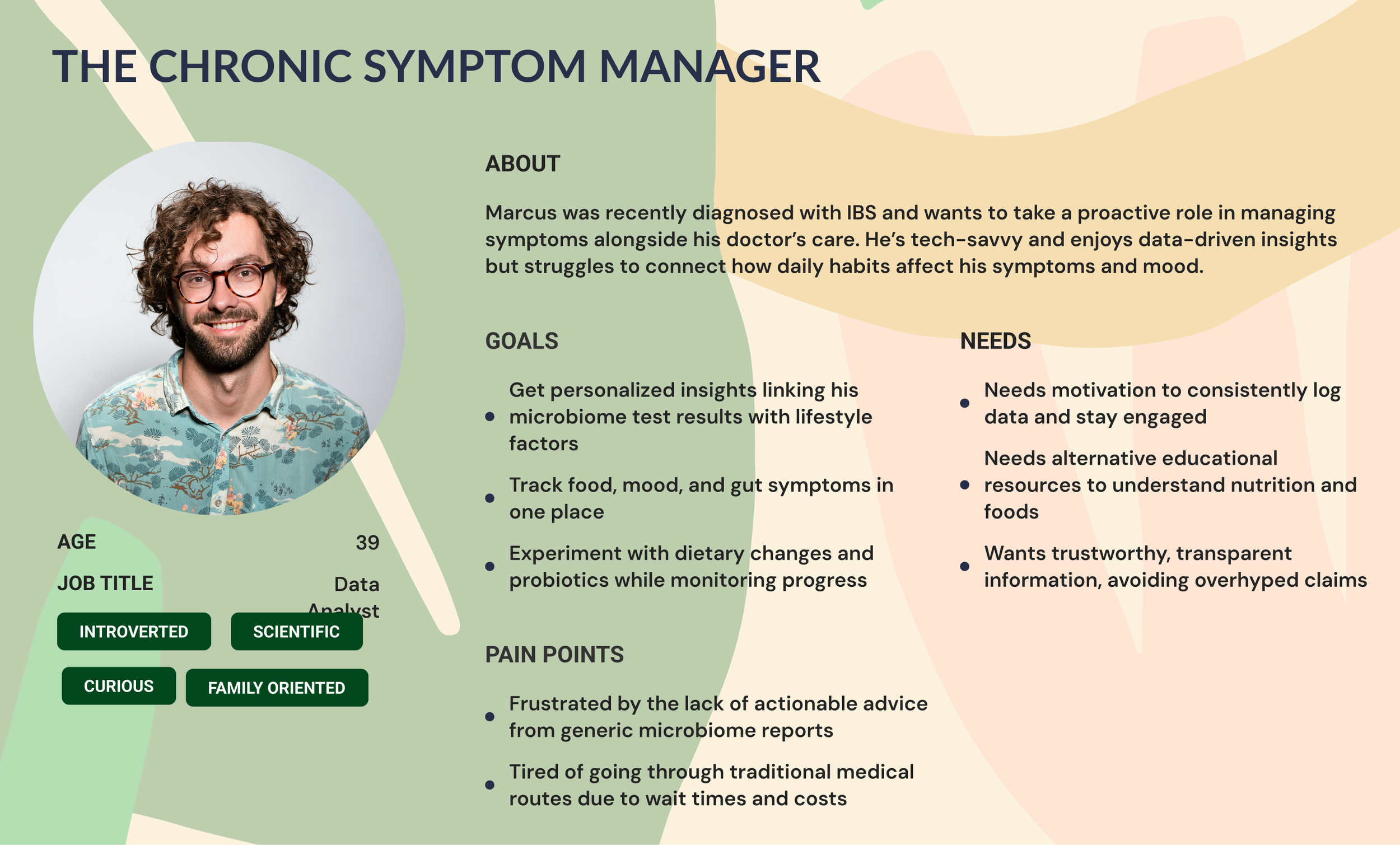
User Personas

Ideation Phase
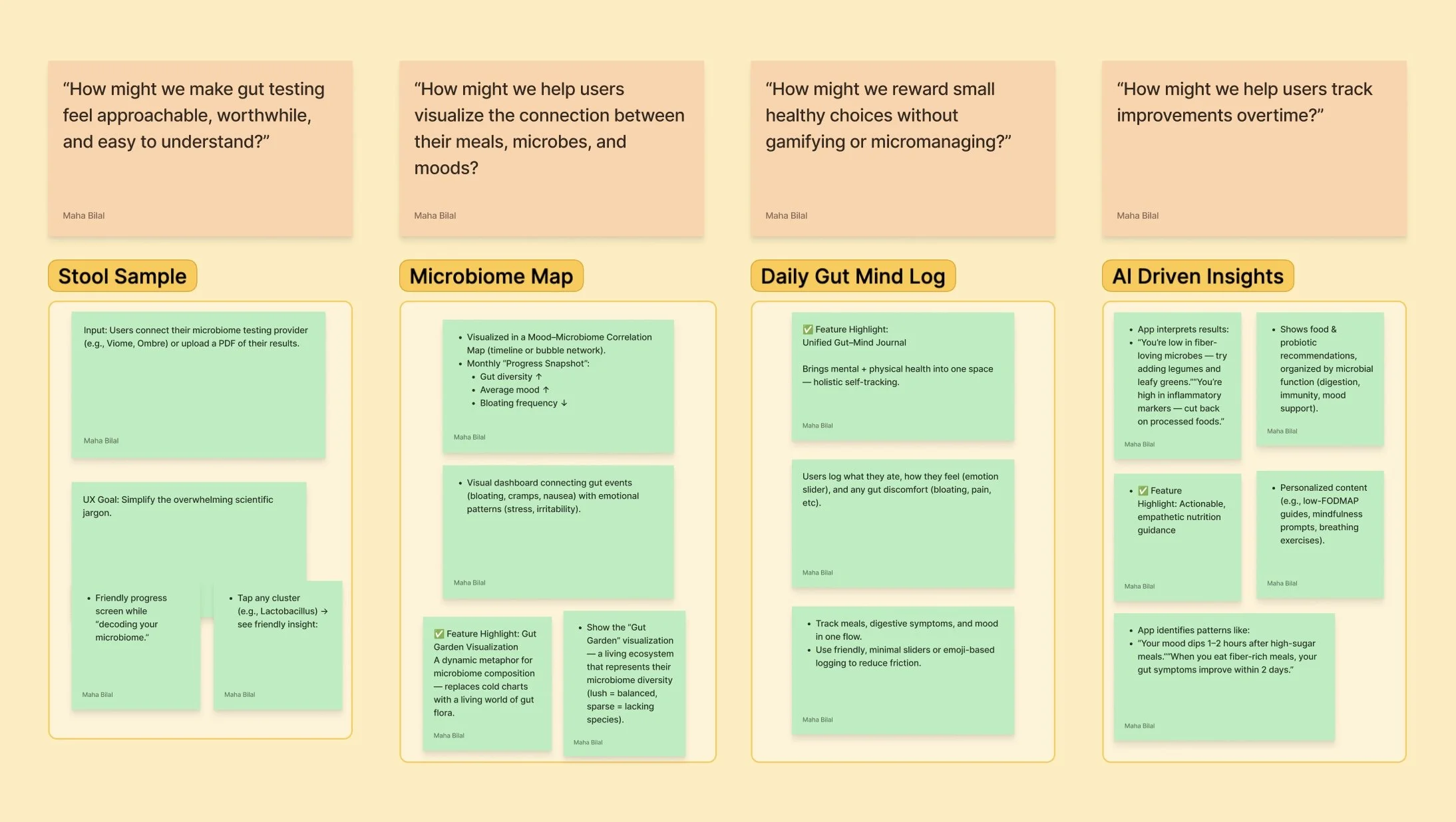
I created a few “how might we“ questions to guide possible user flows and move from abstract goals to brainstorming solutions.
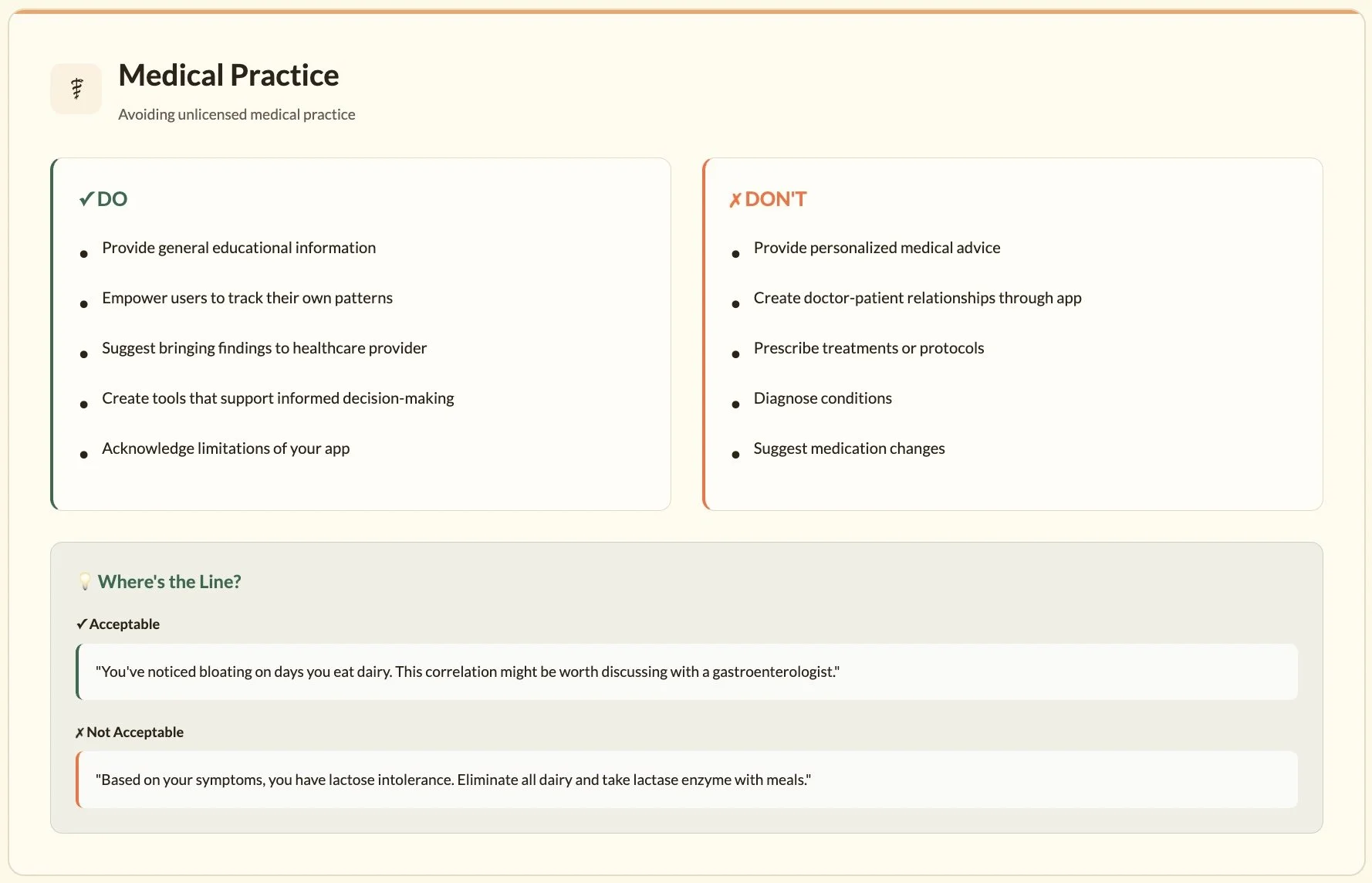
Compliance Guide
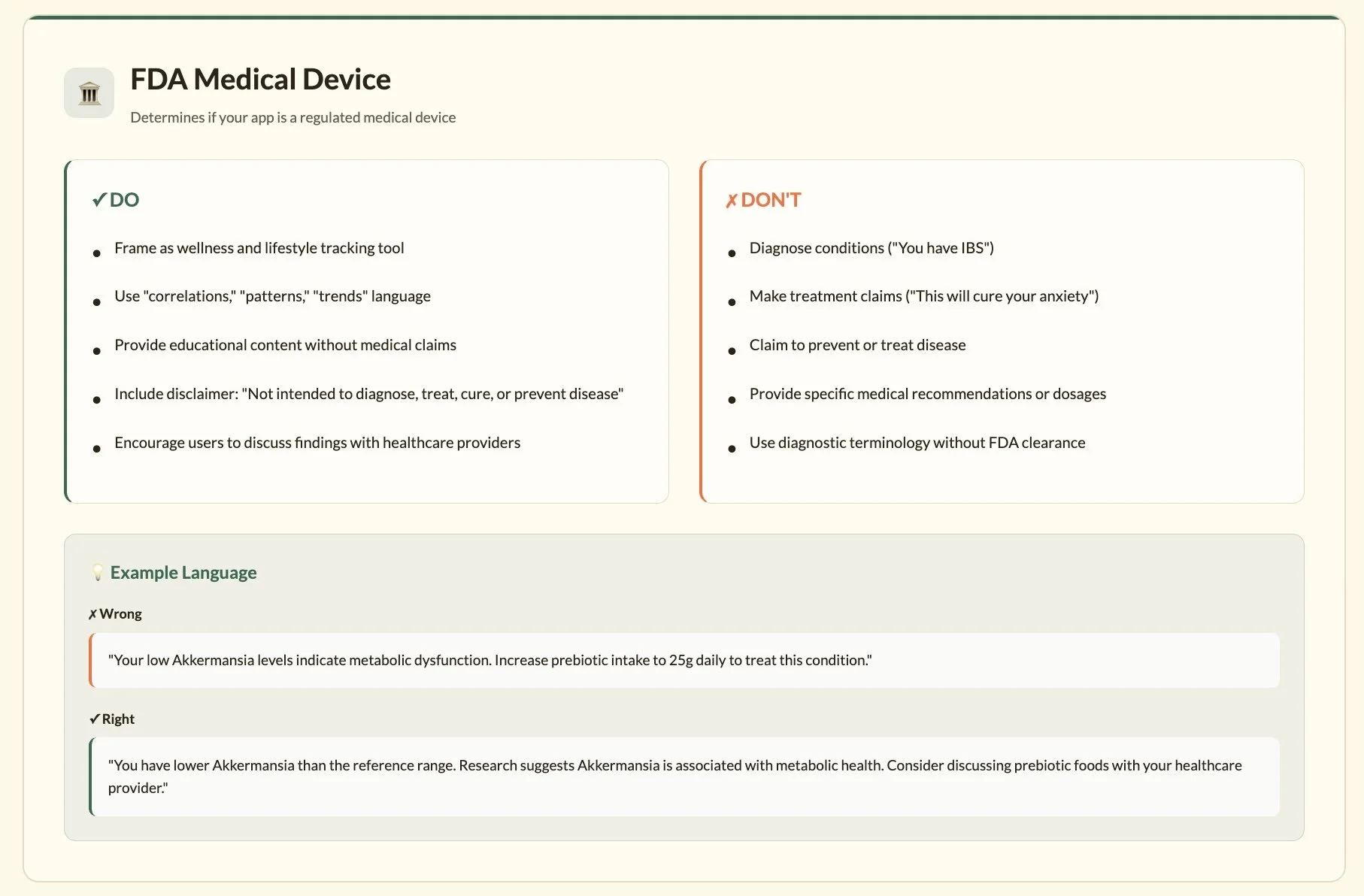
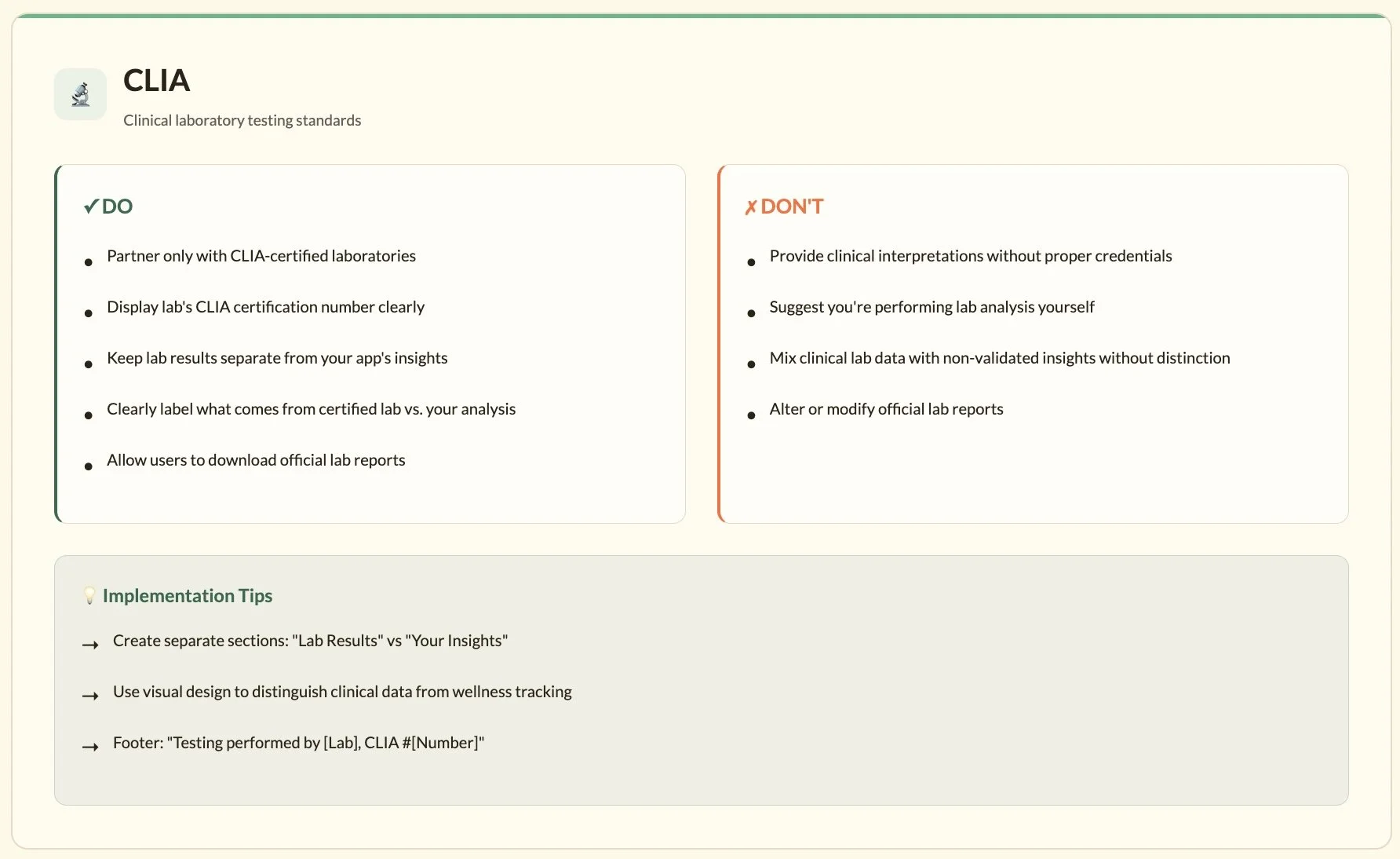
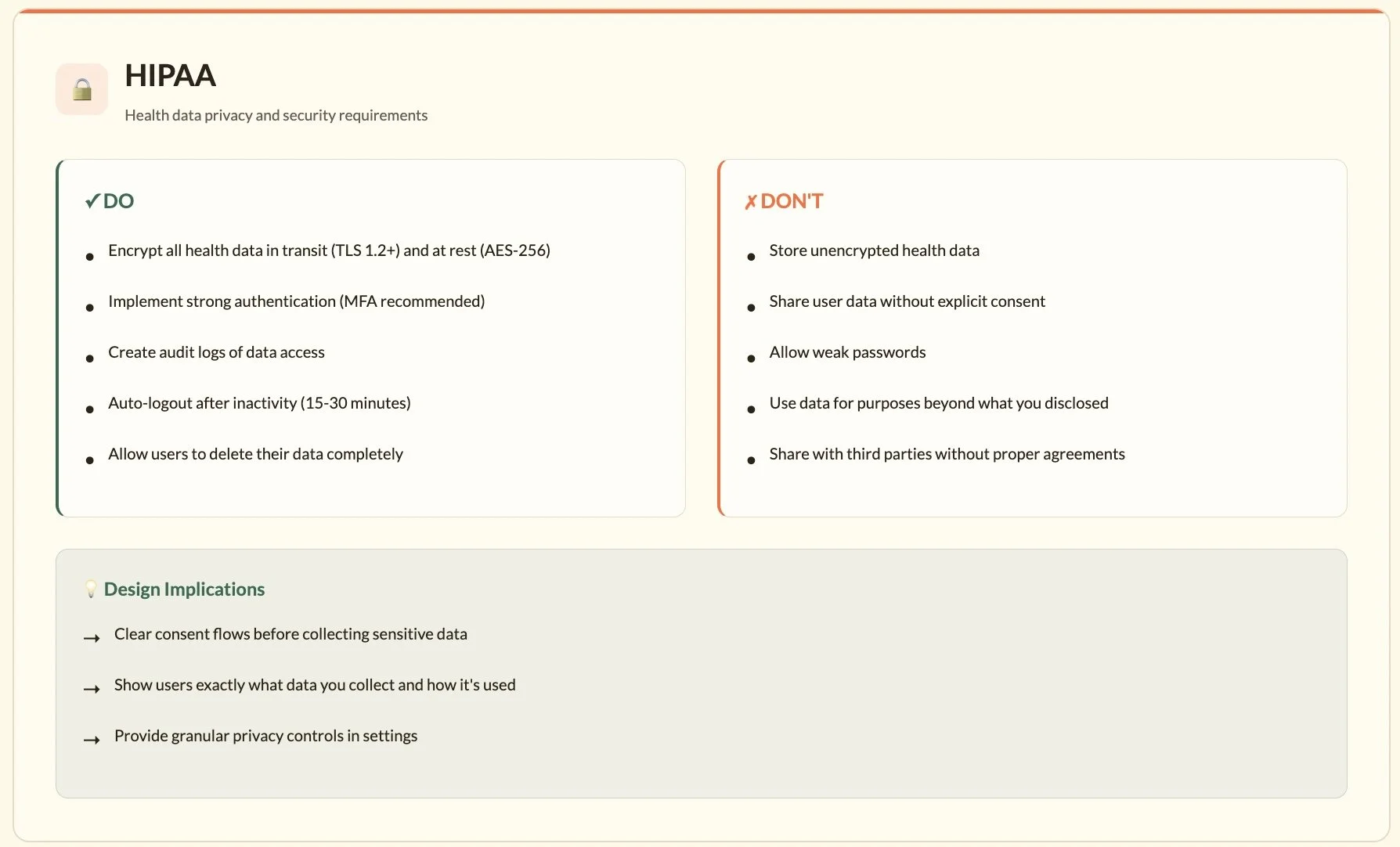
I needed to clarify regulations to ensure compliant design. The key was to use careful language that gives no medical advice or conclusions, frame the app as a wellness tool rather than a medical device, and ensure informed consent and patient privacy in every UX decision.
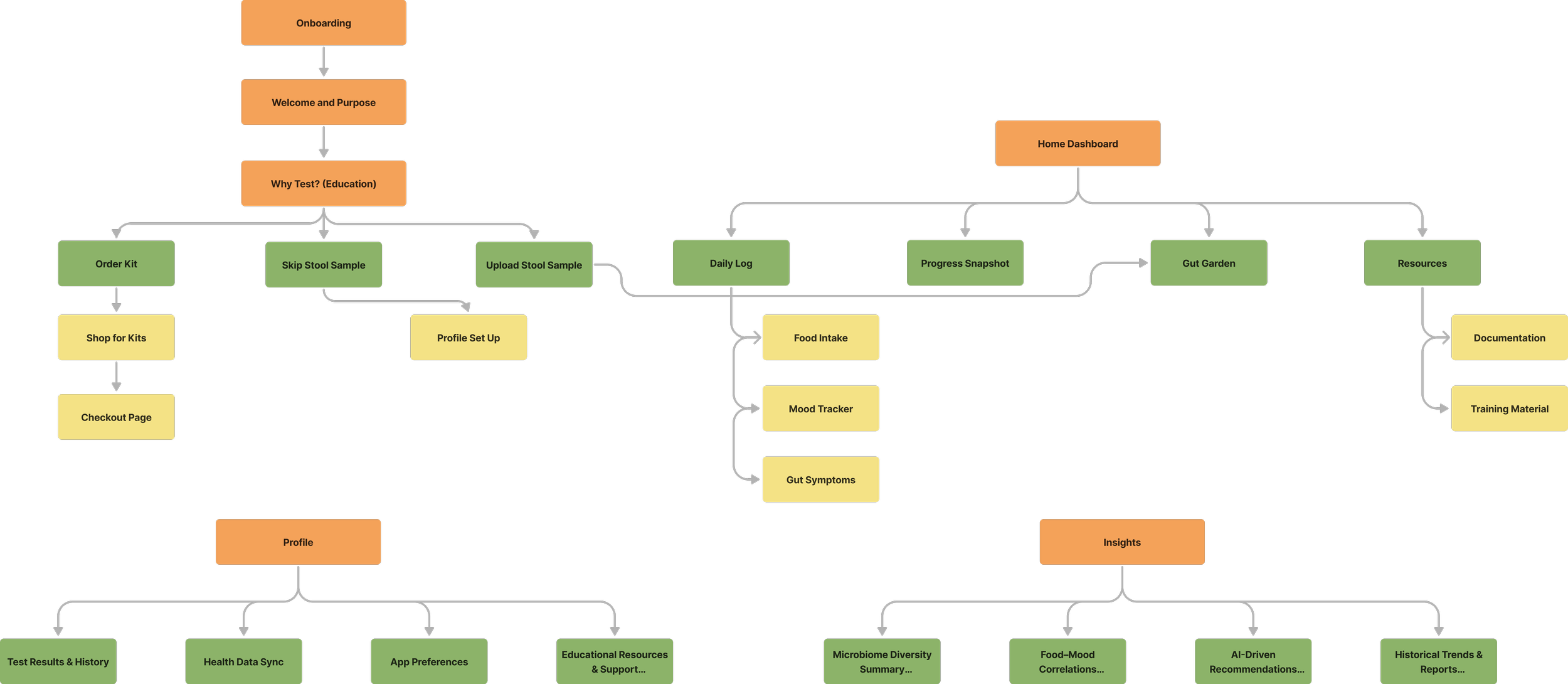
Site Map
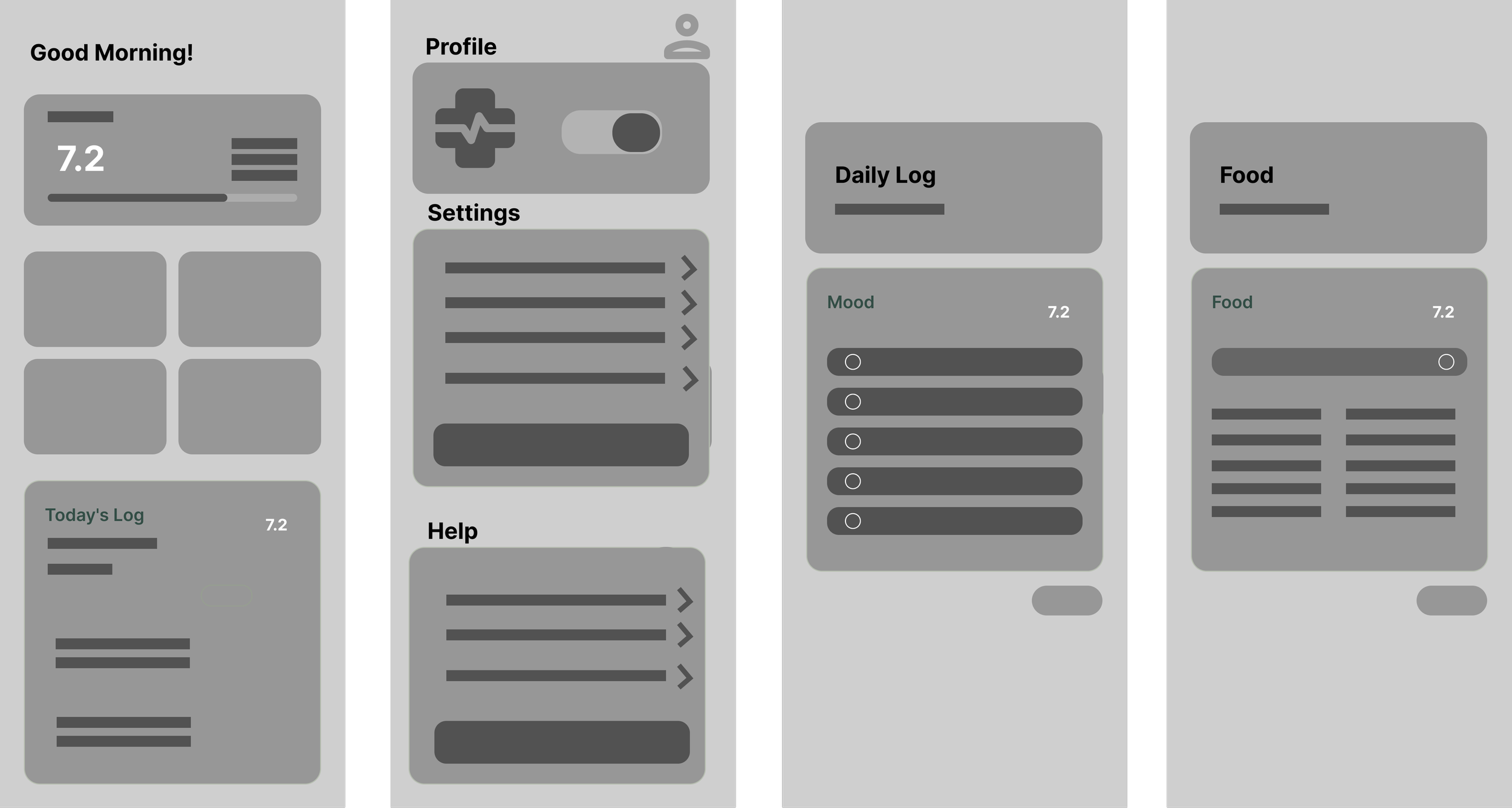
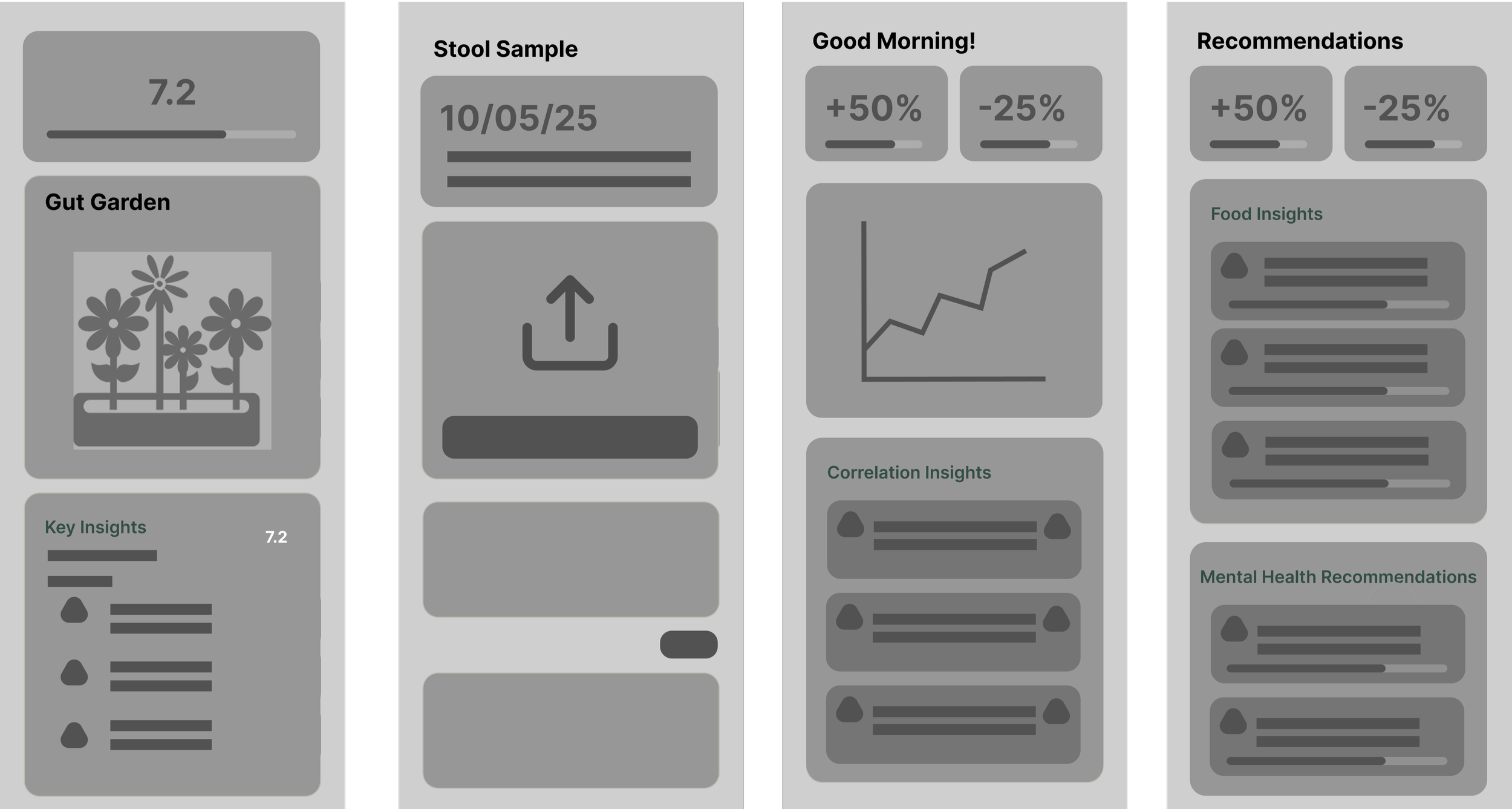
Lo-Fidelity Wireframing
Using AI to Design
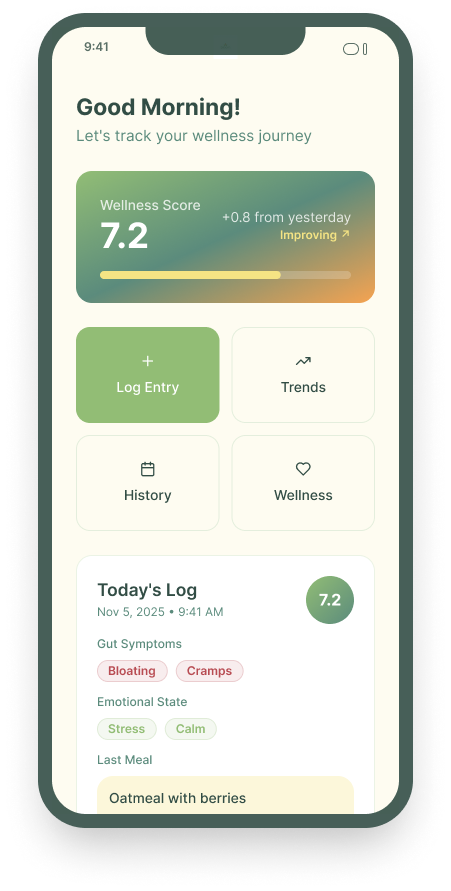
The design industry is evolving rapidly with the rise of AI tools. I used Lovable to accelerate my workflow and inspire new ways of designing.
I vibe coded a functional prototype for an MVP, iterating quickly between the chatbox and refining in Figma.

Hi-Fidelity Prototype
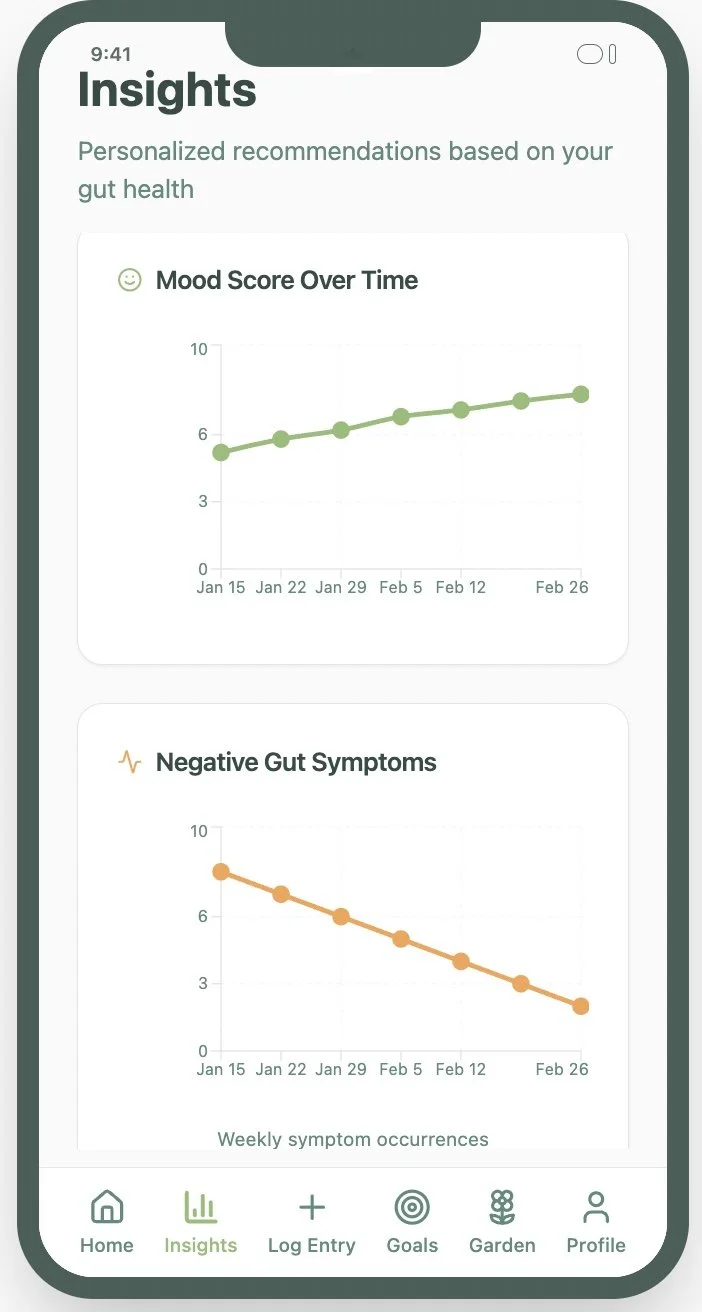
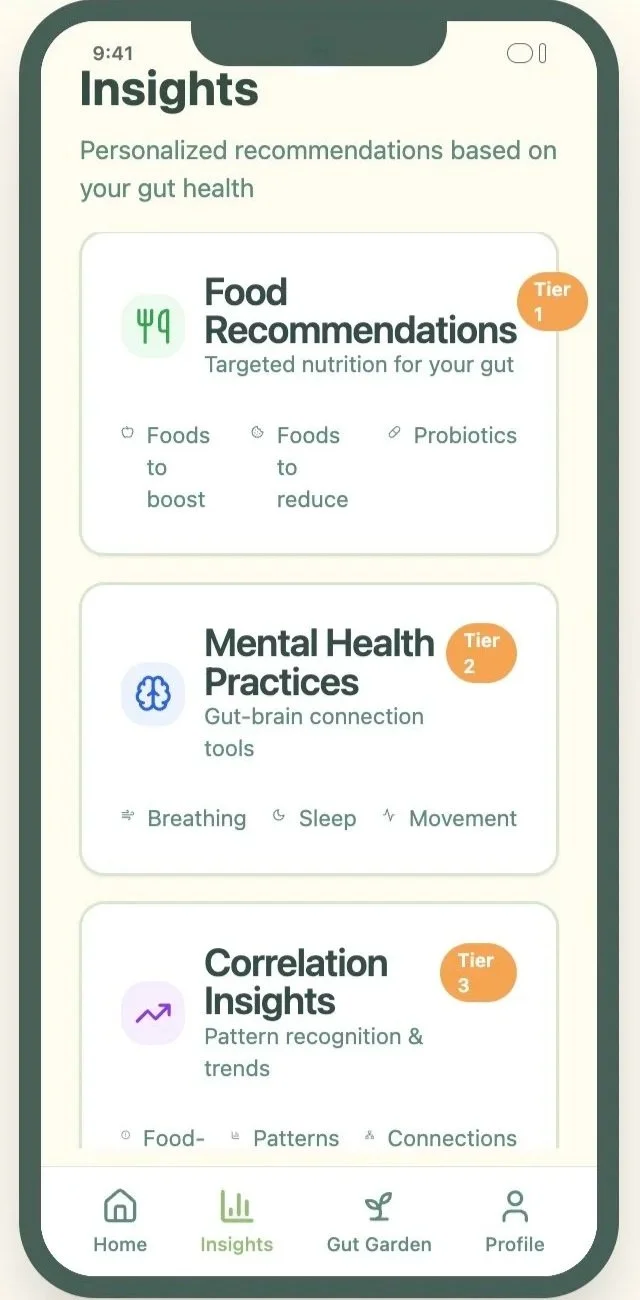
Insights Screens
Iterating With Lovable
After
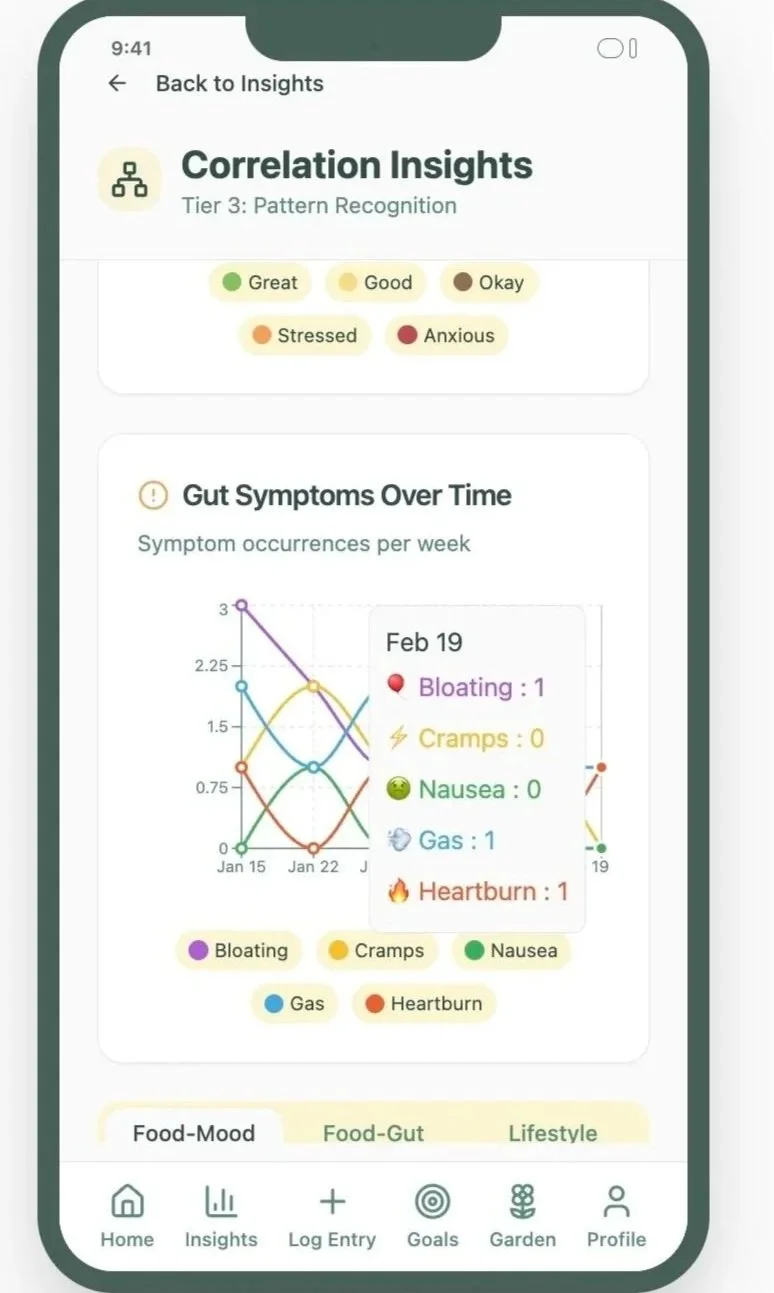
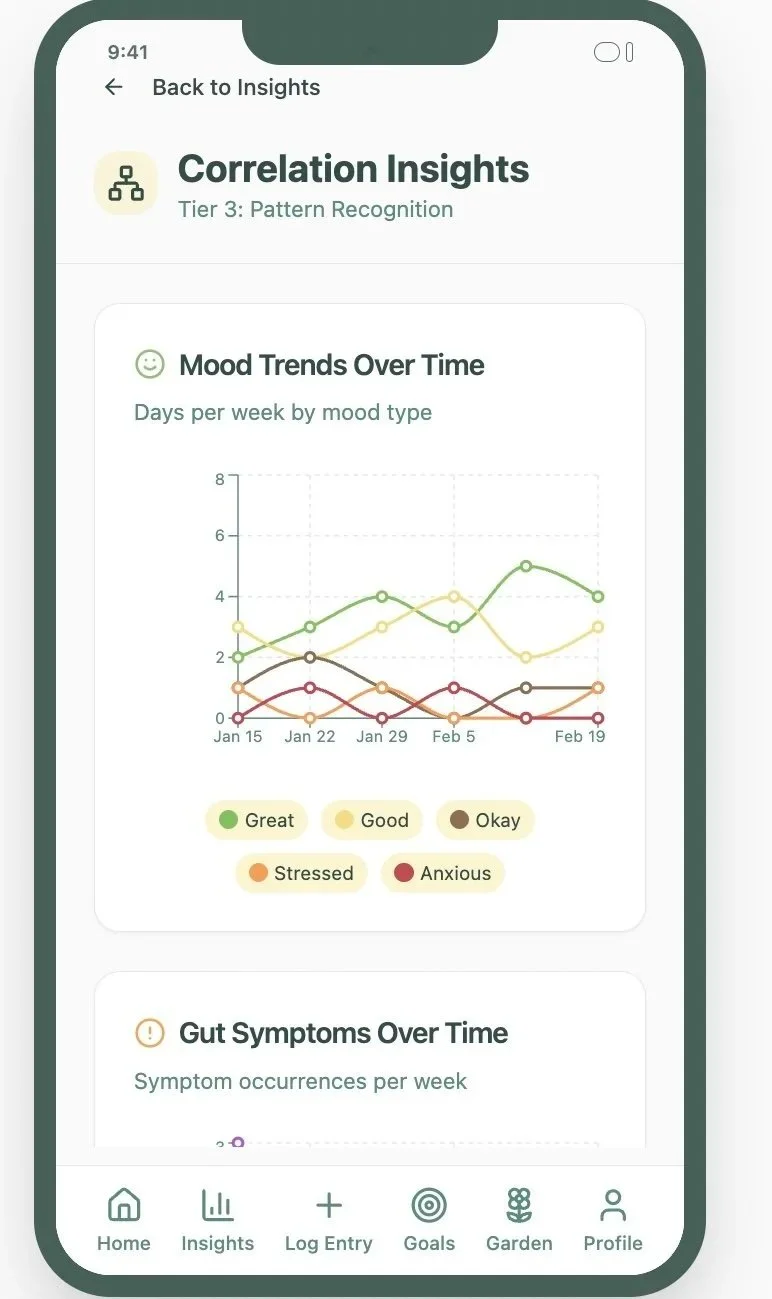
Detailed Correlation Graphs
After
Before
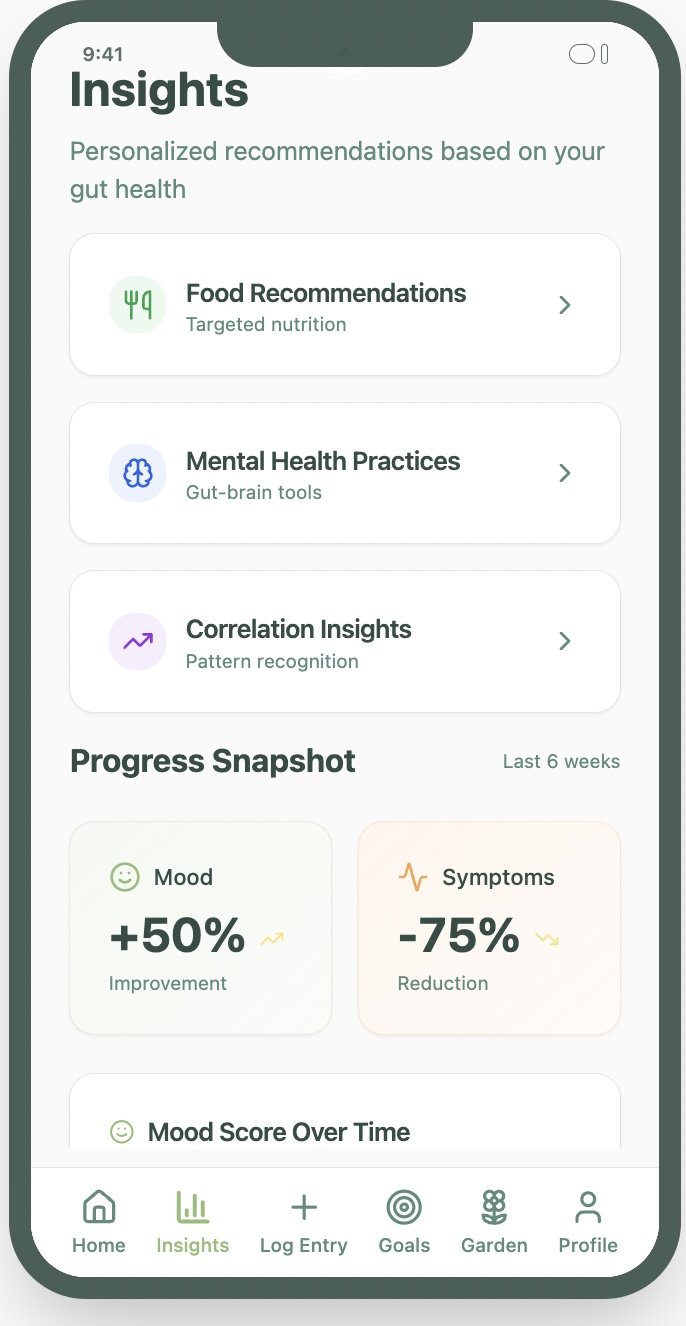
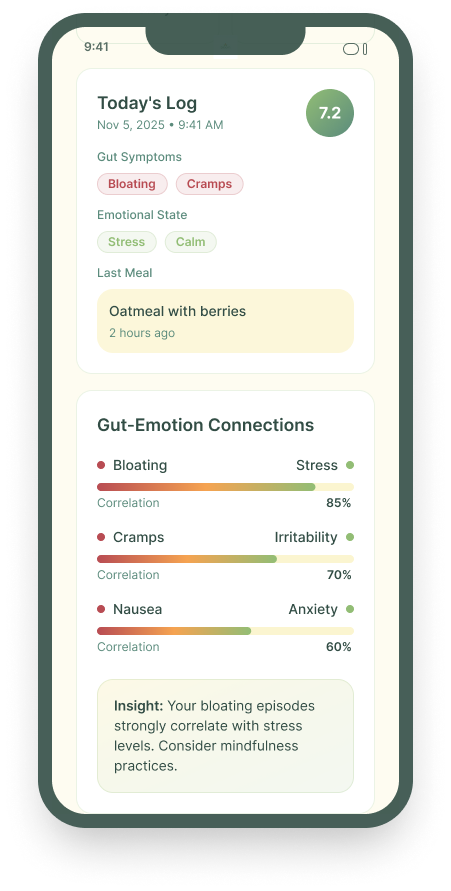
I prompted Lovable with my color palette, some UX writing based on my research findings, lo-fidely wireframes and the site map. I iterated screen by screen within the chatbox to make quick changes.
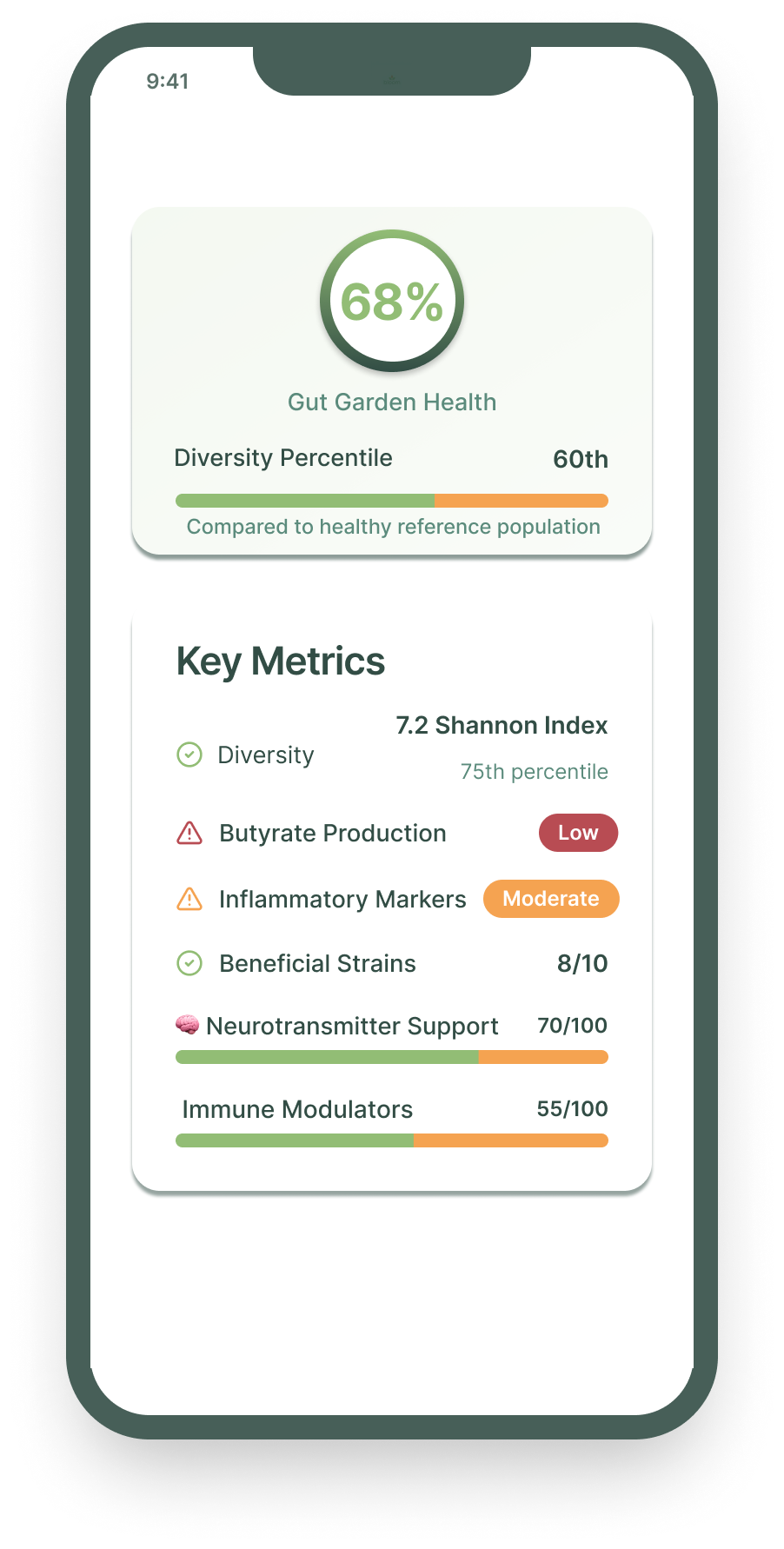
Gut Garden
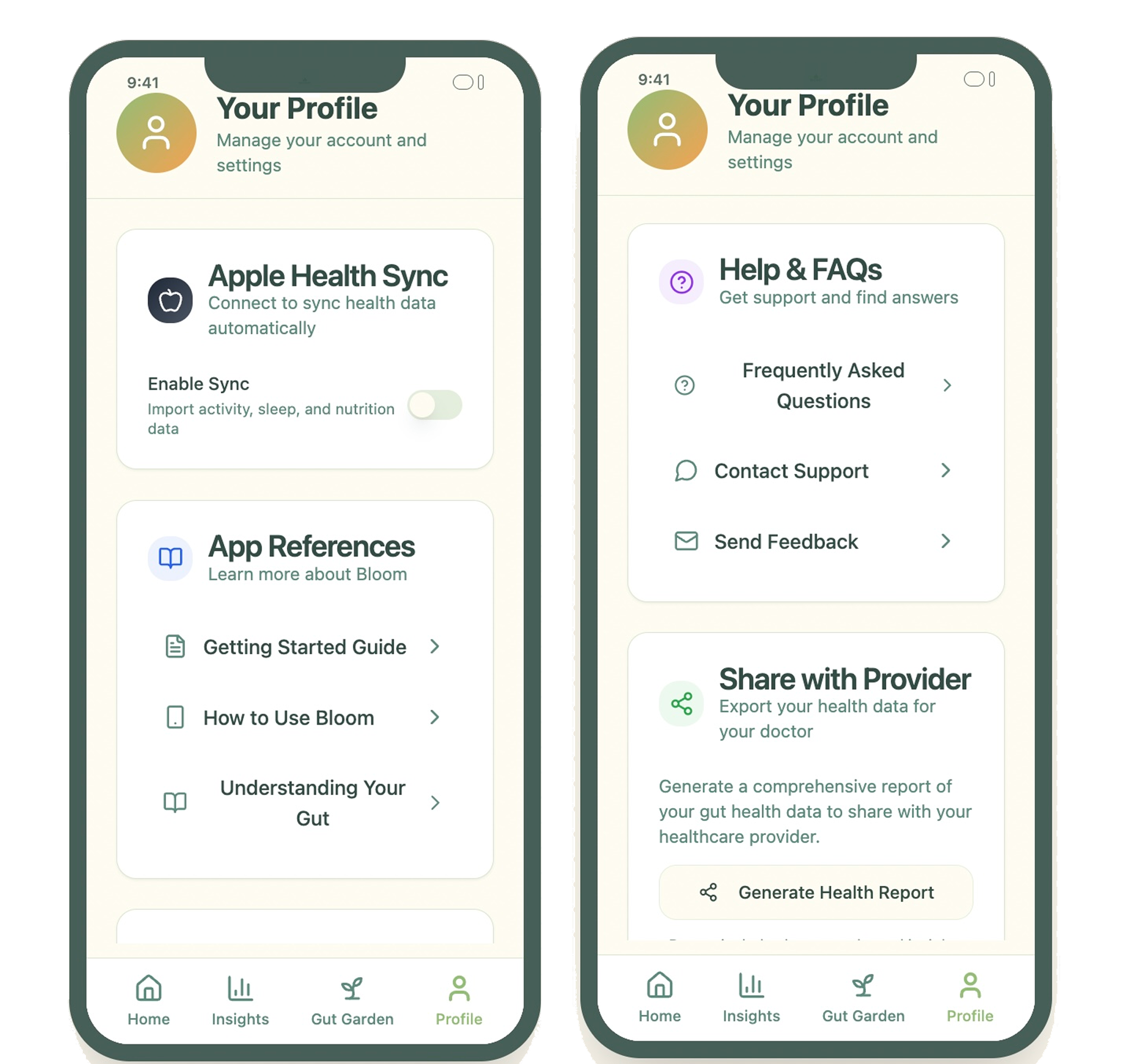
Profile and Health Data
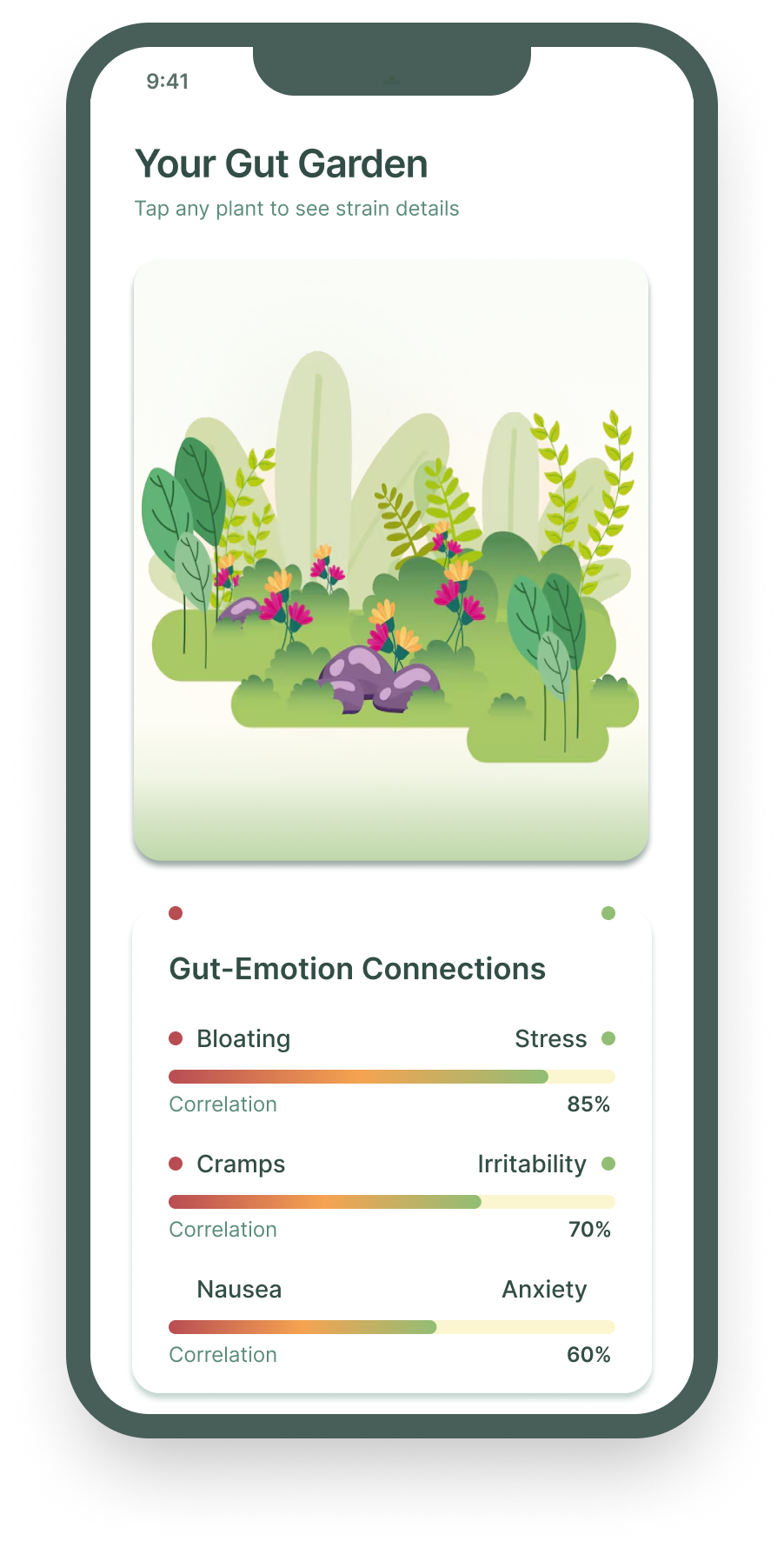
To make a meaningful visualization that earns the users’ trust, I added:
strains classified by either relative abundance or presence
key metrics with tooltips to explain scientific jargon in simple terms
an overall composite health score based on the Shannon Index
In designing a health app, it is imperative that users know how their sensitive data is being handled to instill trust in the app.
sync with Apple Health button to empower users to determine their privacy setting and how their data is shared across apps, while allowing for deeper insights
generate a health report PDF to share with their doctor, allowing users to inform their gut-mind insights in the app with those of real clinical professionals
Learn More section to show transparency in how the app makes science-backed recommendations, along with onboarding help and more educational resources
Personalized Goal Setting
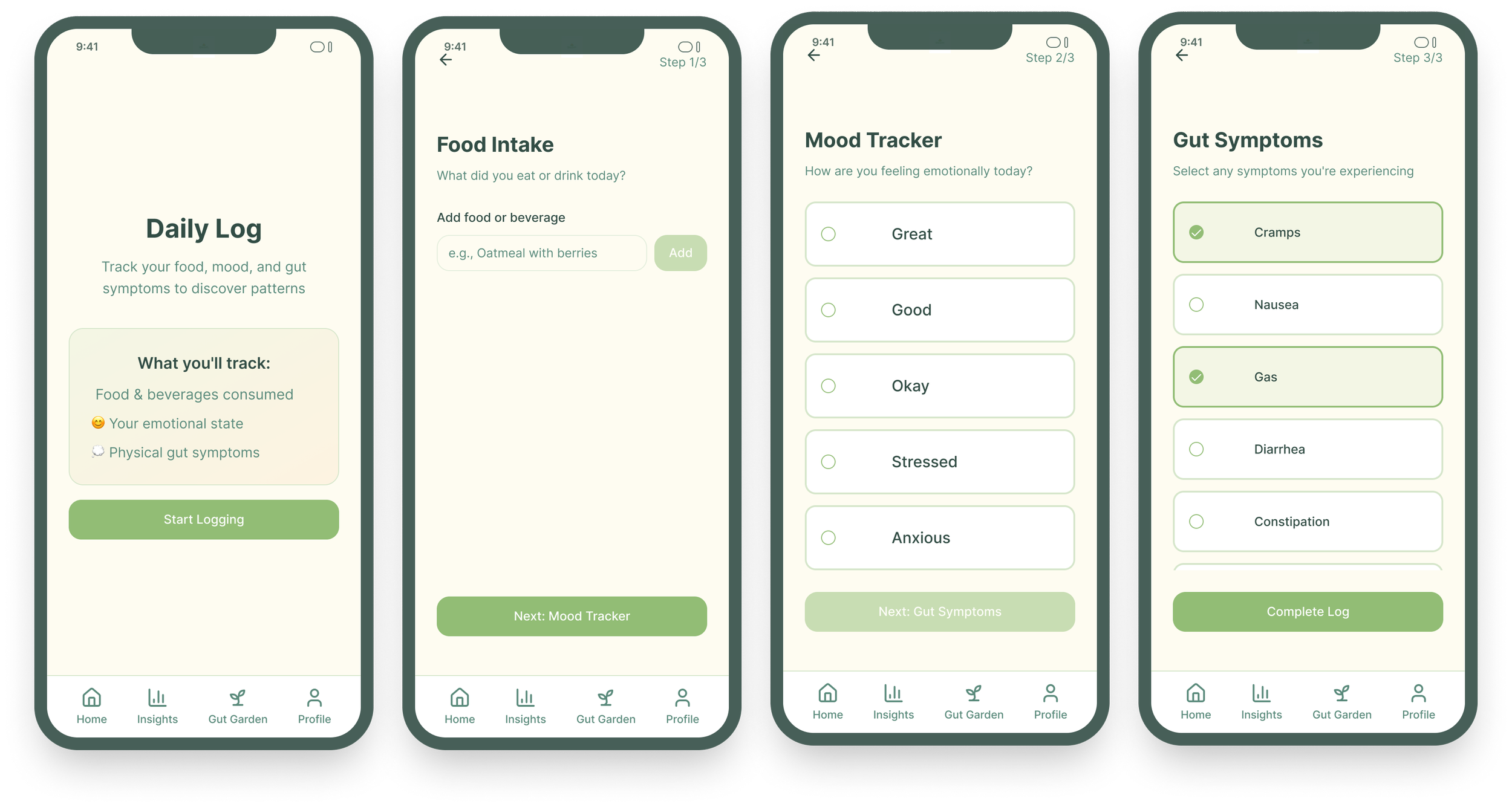
Daily Log
To ensure that the app insights can be translated into actionable lifestyle changes, I created a goal tracking page featuring:
personalized goal recommendations directly from insights page to motivate users
rewarding messages upon task completion
snapshot on home page of daily goals
quick edits on adding and removing goals
The original daily log I made in Lovable wasn’t very user-friendly. I iterated to make the log entry flow more intuitive, seamless and engaging, with minimal scrolling.
I realized that there might be confounding between correlating a certain meal with multiple food items with a specific mood. To solve this, I incorporated a filter to categorize meal type, further stratifying the data.
Next Steps
I will conduct user testing before iterating again. I hope to see this app come to life as it becomes more scientifically feasible to use the microbiome data to predict gut-mind correlations.
Check out my other projects!